
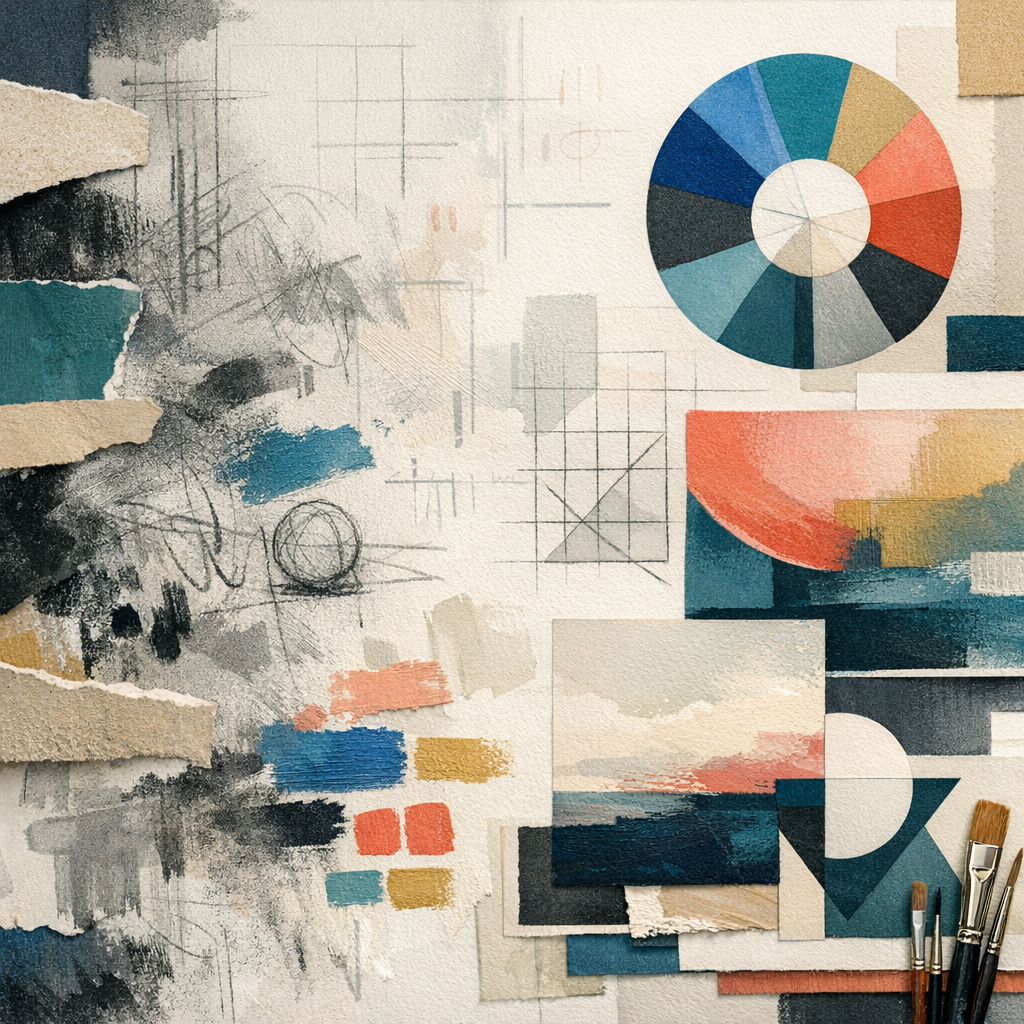
This course is designed for Year 10-11 students preparing for GCSE Art and Design who need a clear, practical route through coursework and exam preparation. It aligns revision and skill-building to the exam board specification and teaches students how to improve portfolio quality, respond to assessment objectives, and prepare effectively for the externally set assignment.
Students begin with a diagnostic assessment to identify strengths and weaknesses in observation, recording, experimentation, annotation, and idea development. From there, the course builds the underlying curriculum knowledge needed for strong performance: formal elements, composition, colour, observational drawing, artist research, contextual understanding, and reflective writing.
The programme is not limited to revision tips. It teaches how to construct and improve an art project from first idea to final outcome, with explicit focus on how evidence is rewarded by examiners. Students learn how to interpret themes, plan projects, collect source material, analyse artists, experiment with media, refine ideas, annotate effectively, and present work clearly for assessment.
Practical application is built into every stage. Students work through model examples, guided tasks, independent practice, exam-style written questions, timed drills, cumulative review, and mock exam reflection. They also learn how to read mark schemes, recognise common weaknesses, and use feedback and mistake logs to make measurable improvements.
By the end of the course, students will be able to:
- Explain how GCSE Art and Design is assessed, including the role of coursework, the externally set assignment, and the four assessment objectives
- Use subject-specific vocabulary accurately in annotation, analysis, and written responses
- Carry out relevant artist research and turn it into practical development rather than copied content
- Record from primary and secondary sources with purpose and technical control
- Experiment with a range of media, processes, compositions, and visual approaches to support AO2
- Develop and refine ideas logically so that progression across a project is clear
- Plan, produce, and evaluate final outcomes that connect directly to earlier research and experimentation
- Organise and present portfolio evidence so it is easy for an examiner to follow
- Prepare effectively for the externally set assignment, including theme interpretation, preparation work, and timed studio practice
- Apply mark schemes to improve both practical work and written exam-style answers
- Create a revision plan that uses spaced retrieval, mixed practice, and grade-targeted action steps
The course is especially useful for students who want more structure, need help understanding what high-mark work looks like, or want to build confidence before final assessments. It provides a full preparation pathway from diagnostic baseline to final revision plan, with concrete methods that students can apply directly to their own GCSE Art and Design projects.