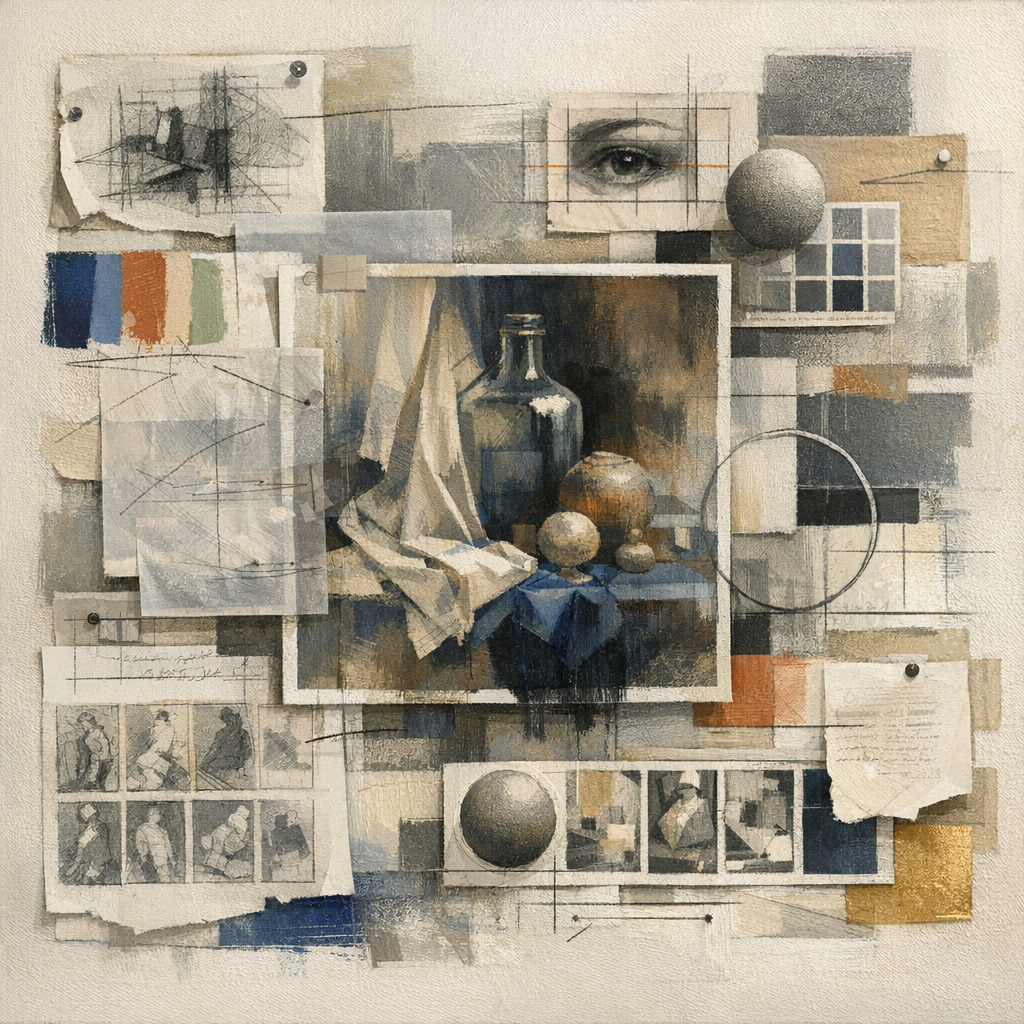
This course is designed for Year 12-13 students preparing for A-Level Art and Design, including those aiming for strong grades for university admission and those who need a deeper understanding of how high-level work is constructed, assessed, and improved. It is aligned to the selected exam board and covers the full pathway from diagnostic assessment to final outcome planning, written study, and externally set assignment preparation. Students begin by identifying their current position through a structured baseline in observational drawing, idea development, annotation, artist analysis, and written evaluation. They then learn how the specification is organised, how assessment objectives operate in practice, how marks are awarded, and how to interpret command words, timing, and performance expectations accurately. The programme teaches the underlying curriculum in detail rather than relying on shortcuts. Students learn how to build a viable personal investigation, select and use primary and secondary research, analyse artists and contexts, and turn research into practical development. Core visual language is taught explicitly, including formal elements, composition, scale, proportion, colour, media qualities, and subject-specific vocabulary, so students can both make stronger work and explain it clearly. Practical development is treated as a sequence of decisions. Students learn how to record from observation, experiment meaningfully with materials and processes, compare variations, refine ideas, and build coherent development trails that lead to resolved outcomes. They also learn how to annotate work effectively, evaluate experiments with precision, and connect written reflection to assessment objectives. The course gives substantial attention to critical and written performance. Students practise visual analysis, comparative writing, evidence-based interpretation, and the structure of the written study. They learn how to formulate strong research questions, organise evidence, integrate personal practical links, and edit analytical writing for clarity and accuracy. Timed written responses and responses to unfamiliar material are included so students can apply their knowledge under assessment conditions. Throughout the course, students work with original exam-style questions, guided practice, independent tasks, cumulative review, timed drills, and mistake-log activities. Mark scheme training is built in so students can recognise what separates mid-band and top-band performance, self-assess more accurately, and make targeted improvements. Portfolio development: build stronger evidence for research, experimentation, refinement, and presentation. Personal investigation: choose a viable theme, structure development, and sustain a coherent enquiry. Artist research and visual analysis: move beyond description to precise contextual and formal analysis. Technical control: improve use of drawing, painting, print, photography, mixed media, and presentation decisions. Written study: plan, draft, and refine analytical writing with relevant evidence and personal links. Exam technique: interpret tasks correctly, respond to unfamiliar questions, and work effectively under time limits. Grade improvement: use mark schemes, feedback, and revision planning to move toward A or A* performance or a secure target grade. By the end of the course, students will understand not only what to produce for A-Level Art and Design, but also why stronger work earns higher marks. They will finish with clearer project planning, stronger analytical writing, more purposeful experimentation, better final outcomes, and a revision strategy that is practical, specific, and tied to the demands of the exam board.
- Course Entry Audit and Skills Baseline
- Understanding What Strong A-Level Art Performance Looks Like
- Building a Personal Grade-Target Plan
- Diagnosing Technical and Conceptual Weaknesses
- Using a Mistake Log for Continuous Improvement
- Planning Independent Study Time
- How the Specification Is Organised
- Assessment Objectives in Detail
- Component 1 and Component 2 Requirements
- Command Words and Task Interpretation
- Marks, Levels, and Grade Boundaries
- Time Allocation Across the Course
- Common Misreadings of the Specification
- Formal Elements: Line, Tone, Shape, Form, Colour, Texture, Pattern, and Space
- Composition and Visual Hierarchy
- Scale, Proportion, and Distortion
- Media-Specific Visual Qualities
- Observation, Imagination, and Conceptual Intent
- Developing Subject-Specific Vocabulary
- Choosing a Viable Investigation Theme
- Turning Interests into Strong Lines of Inquiry
- Linking Theme to Context and Meaning
- Writing a Clear Project Proposal
- Planning Initial Visual Research
- Avoiding Weak Project Starts
- Primary Research from First-Hand Observation
- Secondary Research with Purpose
- Photographic Research for Development
- Sketchbook Research Strategies
- Selecting Research That Drives Practical Outcomes
- Ethical and Academic Use of Sources
- Choosing Relevant Artists, Designers, and Movements
- Researching Context Beyond Biography
- Analysing Materials, Processes, and Visual Decisions
- Comparing Multiple Artists
- Writing Personal Responses to Artist Research
- Translating Research into Practical Studies
- Common Errors in Artist Research
- How to Structure a Visual Analysis
- Writing Analytical Rather Than Descriptive Paragraphs
- Using Evidence to Support Interpretation
- Critical Vocabulary for Art and Design
- Evaluating Strengths and Limitations
- From Visual Analysis to Personal Action Points
- Timed Analytical Responses
- Observational Drawing Accuracy
- Expressive and Experimental Drawing Methods
- Recording Texture, Surface, and Detail
- Studying Light, Shadow, and Tonal Structure
- Spatial Awareness and Perspective
- Recording Movement, Figure, and Gesture
- Using Observation to Generate Compositions
- Drawing Media: Graphite, Charcoal, Ink, and Pastel
- Painting Media: Acrylic, Oil, Watercolour, and Gouache
- Printmaking and Repetition
- Photography and Digital Processes
- 3D and Mixed Media Approaches
- Surface, Support, and Presentation Choices
- Health, Safety, and Studio Discipline
- What Meaningful Experimentation Looks Like
- Changing One Variable at a Time
- Generating Multiple Variations from One Source
- Combining Influences Without Copying
- Annotating Experiments with Specific Evaluation
- Deciding Which Experiments to Pursue
- Building a Development Sequence
- Colour Theory in Practice
- Compositional Planning Through Thumbnails
- Using Contrast and Emphasis
- Abstraction, Simplification, and Reduction
- Narrative and Symbolic Composition
- Editing Visual Information
- How to Refine Rather Than Repeat
- Responding to Feedback Strategically
- Strengthening Coherence Across a Project
- Improving Technical Resolution
- Deepening Conceptual Intent
- Recognising When a Piece Is Resolved
- What Effective Annotation Must Do
- Writing Short Evaluations of Practical Work
- Integrating Visual and Written Evidence
- Using Subject Terminology Naturally
- Avoiding Common Annotation Weaknesses
- Cumulative Review Checkpoints
- Purpose and Structure of the Written Study
- Formulating a Strong Research Question
- Selecting and Organising Evidence
- Writing Comparative Analysis
- Integrating Personal Practical Links
- Academic Referencing and Source Management
- Editing for Clarity and Precision
- Identifying the Right Final Outcome
- Planning from Development Evidence
- Preparing Maquettes, Mock-Ups, and Layout Trials
- Sequencing the Making Process
- Maintaining Quality Under Time Constraints
- Evaluating the Finished Outcome
- Understanding the Externally Set Assignment Paper
- Selecting the Best Starting Point
- Generating Ideas Quickly from Unfamiliar Prompts
- Building a Focused Preparation Project
- Exam-Time Making Strategies
- Avoiding Last-Minute ESA Problems
- Understanding Art and Design Written Question Types
- Planning Analytical Answers Quickly
- Constructing High-Quality Paragraphs
- Handling Unfamiliar Images or Contexts
- Using Examples Precisely
- Common Weaknesses in Written Responses
- How Examiners Apply Level Descriptors
- Reading Mark Schemes with Precision
- Standardising Sample Responses
- Improving Work One Band at a Time
- Peer Assessment That Actually Helps
- Self-Marking and Action Planning
- Deconstructing Strong Student-Style Project Journeys
- Worked Example: Artist Analysis to Practical Response
- Worked Example: Refining a Weak Composition
- Guided Practice: Experimental Sequence
- Independent Practice: Mini Investigation
- Reviewing and Improving Independent Work
- Connecting Research, Experimentation, and Final Outcomes
- Bringing Formal Analysis into Practical Decisions
- Linking Written Study and Studio Practice
- Transferring Skills Between Media and Topics
- Recognising Recurring Assessment Patterns
- Original Exam-Style Visual Analysis Questions
- Original Exam-Style Comparative Questions
- Short Quizzes on Vocabulary, Processes, and Assessment Objectives
- Cumulative Review of Project Development Skills
- Targeted Practice on Common Mistakes
- Full Answer Explanations and Improvement Notes
- Timed Drills for Analytical Writing
- Timed Planning for ESA and Written Tasks
- Mock Exam and Portfolio Review
- Closing High-Impact Knowledge and Skill Gaps
- Designing a Final Revision Timetable
- Final Week and Exam-Day Readiness